
Transpersonal Psych
There are many models of the person within the field of psychology. Transpersonal models include aspects of the spiritual. For this presentation Psychosynthesis (1965), one of several Transpersonal models, is used as a vehicle for communicating Meditation with Grace. Roberto Assagioli, a contemporary of Freud and Jung, developed the Psychosynthesis model during his lifetime.
The Psychosynthesis Model of the Person
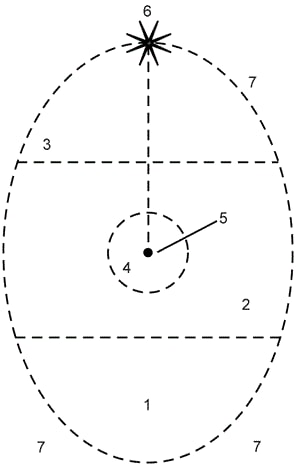
The Higher Self
The ability to focus our attention is our most valuable personal freedom. Yet, for most of us our attention is captured by unconscious and sometimes conscious processes. Substratum to these processes is the Higher Self. Meditating with Grace focuses attention/intention with the Higher Self. Grace is very real, subtle and substratum to our everyday experiences.
Within the marketplace our attention is a sought after commodity. By capturing our attention we may be:
- Convinced into purchasing a product.
- Give labor time and effort to a cause.
- View favorably or unfavorably upon another person, group or object.
Meditating with Grace is focusing our attention upon or with Grace. Starting with short sessions (1/2 hour) we intend to focus our awareness upon or with Grace until that intention is interrupted by a thought, revelry of imagination, feeling other than Grace or sensation. We then repeat to attend to the focus of our intention again and again during the designated session time. As we develop our ability to focus our attention with or upon Grace the sessions are interrupted less and less by thoughts, revelry of imagination, feelings other than Grace and sensations. Our relationship with Grace is a personal experience that each individual works out for themselves. We must be careful not to distort our experience (relationship) with neurotic or narcissistic fantasies. If a spiritual crisis emerges we should seek help. Grace manifests within and without and help can sometimes come from a spiritual adviser or mental health professional. During meditation sessions Grace will sometimes feel to be far away from us, sometimes as a beloved we are in relationship with and sometimes closer than our very breath, closer than any thought, transcending object/subject boundaries.
Mostly we are unaware or only vaguely aware that there is a Higher Self. Those who seek to transcend the human condition toward the Higher Self find the task impossible from the frame of reference of the Consciousness Self or I. Asking assistance through prayer is essential. Shear will power and determination within the consciousness of the human condition is not capable of transcendence. The Sages have acknowledged this inability. They have also confirmed that transcendence is possible through Grace.
During the beginning of the twentieth century the neophyte field of psychology strived to be considered a science based within classical physics, evolution theory and the scientific method. Roberto Assagioli, decades ahead of his time, realized the importance of the new field but also realized that there was something missing, the Higher Self. During the later half of that century it was demonstrated that not only classical physics but also the new physics of quantum mechanics plays a large part in our ability to perceive our environment. This gave permission for a few scientists and psychologists who had profound experiences of the Higher Self, to communicate and investigate those experiences within their communities.
The Perennial Philosophy
Common to most transpersonal psychologies and to the teaching of the Sages is a philosophy that is multicultural and transgenerational. This philosophy termed the Perennial Philosophy is categorized into four areas (Huxley, A. in Walsh, 1993).
First, there is substratum to our experience a Source or Divine Ground that interconnects us to each other, itself and to the environment. There was not a scientific mechanism for understanding the operation of this Source until classical physics was supplemented with quantum mechanics in the twentieth century. During the later half of that century a few members of the scientific community investigated the hypothesis. There are many outcomes that support the hypothesis. One is Princeton Engineering Anomalies Research (PEAR). This project placed random number generators throughout the world, monitoring them continuously. During times of national or international focus these generators have significantly become less random and more coherent
Second, this Source or Divine Ground can be experienced by individuals. Since the latter half of the twentieth century a few trained psychiatrists and psychologists have experienced a consciousness that transcends the personal ego and have communicated the experience using the language of psychology. So have a few scientists, authors, spiritual seekers and even an astronaut. Investigation into these experiences stimulated the growth of transpersonal psychology.
Third, man has a double nature. It appears that we control ourselves and our environment utilizing a singular personality. However, developmental studies, psychopathology, the phenomena of hypnosis and the placebo effect all support multiplicity. Fourth, is purpose. As ignorance and devaluing of the Source, Divine Ground or Higher Self lessen, peace and harmony within the environment increases.
Quantum Perception and the Higher Self
There is a paradigm shift in science currently occurring. Extrasensory perception has been proven experimentally with supporting statistics (Radin 2006). Within the human body there are sub atomic processes occurring that need the more accurate physics of quantum mechanics for explanation.
| Aspect | Classical Physics | Quantum Physics |
|---|---|---|
| Reality | Independent of our viewing | Dependent on our viewing |
| Causality | Time moves only forward | Dependent on frame of reference |
| Continuity | Continuous smooth progress | Discontinuous |
| Determinism | Given all variables outcome is certain | Outcome is not certain |
The Conscious Self or I
Thoughts, beliefs, feelings, sensation and revelry of imagination which we are aware of and which are constantly changing from one instance to another make up the Field of Consciousness. This awareness can help us to transcend or dis-identify from the contents within the Field of Consciousness directly experiencing the Conscious Self or I.
Using our awareness we realize that thoughts, beliefs, feelings, sensations and revelry of imagination constantly change but our awareness does not. This awareness without content is our Conscious Self or I.
Once we realize our Conscious Self or I we intend to form and maintain a Unified Synthesis Center (Assagioli 1965) between our Conscious Self or I and the Higher Self by focusing attention upon Grace. We know Grace exists because we have experienced it and have named that experience Grace.
The Unconscious
The unconscious is an autonomous storage system of sensory data and patterns of behavior developed over time to negotiate the environment and relationships within the environment. These patterns are strategies previously developed to handle environment situations of coping and adaptation the best way we could at the time.
Sporadic affirmations will not program the unconscious. According to the von Neumann/Stapp model to program the unconscious intention must be reinforced by attention in rapid and repeated succession. This causes the quantum wave form to endure longer.
Meditating with Grace and TranspersonalPsych
During the first step of Meditation with Grace we become in touch with our Conscious Self or I putting aside the content that we think of as ourselves training to do this with a chosen dis-identification exercise.
Once we find this core awareness we couple it to Grace, accomplishing this by recognizing the reality of Grace and Grace's ability to be immanent and transcendent. This is our intention.
We then focus this intention until a thought, revelry of imagination, feeling other than Grace or sensation distracts us. Intention is again attended to repeatedly until the designated practice period is finished. What we are doing is developing a Template for Action (Stapp 2007) within the unconscious, or a Unified Synthesis Center (Assagioli 1965) learning to rest within Grace.
References
- 1.Almaas, A (1988). The Pearl Beyond Price: Integration of Personality into Being; An Object Relations Approach. Berkeley: Diamond Books.
- 2.Anonymous (1975). A Course in Miracles. Mill Valley, CA: Foundation for Inner Peace.
- 3.Assagioli, R. (1965). Psychosynthesis: A Manual of Principles and Techniques. New York: Hobbs, Doorman & Co.
- 4.Assagioli, R. (1973). The Act of Will. Maryland: Penguin Books.
- 5.Assagioli, R. (1991). Transpersonal Development: The Dimensions Beyond Psychosynthesis. London: Crucible.
- 6.Botkin, A., Hogan, C. (2005). Induced After Death Communication: A New Therapy for Healing Grief and Trauma. Charlottesville: Hampton Roads.
- 7.Brown, M. (2004). Unfolding Self: The Practice of Psychosynthesis. New York: Helios Press.
- 8.Carter, R. (2008). Multiplicity: The New Science of Personality, Identity, and the Self. New York: Little, Brown and Co.
- 9.Chetsang, Rinpoche (1999). The Practice of Mahamudra. New York: Snow Lion Pub.
- 10.Deikman, A (1982). The Observing Self: Mysticism and Psychotherapy. Boston: Beacon Press.
- 11.Eccles, J. (1994). How the Self Controls its Brain. New York: Springer-Verlag.
- 12.Firman, J., Gila, A. (2000). Psychosynthesis: An Essential Text. California: Psychosynthesis Palo Alto.
- 13.Firman, J., Gila, A. (1997). The Primal Wound: A Transpersonal View of Trauma, Addiction, and Growth. New York: SUNY Press.
- 14.Frederick, C., McNeal, S (1999). Inner Strengths: Contemporary Psychotherapy and Hypnosis for Ego-Strengthening. New Jersey: Lawrence Erlbaum Assoc.
- 15.Goldsmith, J (1992). Living by Grace: The Path to Inner Discovery. New York: HarperCollins.
- 16.Hagelin, J., Rainforth, M., Orme-Johnson, D., Cavanaugh, K., Alexander, N., Shatkin, S., Davies, J., Hughes, A., Ross, E. (1999). Effects of group practice of the Transcendental Meditation program on preventing violent crime in Washington D.C.: Results of the National Demonstration Project, June–July, 1993. Social Indicators Research, 47(2), 153–201.
- 17.Hawkins, D. (2003). I: Reality and Subjectivity. Arizona: Veritas Publishing.
- 18.James, M. (2007). Happiness and the Art of Being: A Layman's Introduction to the Philosophy and Practice of the Spiritual Teachings of Bhagavan Sri Ramana. Victoria: Trafford Pub.
- 19.Kimble, G. (1996). Psychology: The Hope of a Science. Massachusetts: The MIT Press.
- 20.Langford, M. (2007). The Most Direct and Rapid Means to Eternal Bliss. The Freedom Religion Press.
- 21.Maslow, A. (1987). Motivation and Personality. 3rd ed. New York: Harper and Row.
- 22.McTaggart, L. (2002). The Field: The Quest for the Secret Force of the Universe. New York: HarperCollins.
- 23.Meriam, C. (1994). Digging Up the Past: Object Relations and Subpersonalities. Palo Alto: Psychosynthesis Palo Alto.
- 24.Mitchell, E. (2008). The Way of the Explorer: An Apollo Astronaut's Journey Through the Material and Mystical Worlds. New Jersey: New Page Books.
- 25.Peace Pilgrim (1991). Her Life and Work in Her Own Words. New Mexico: Ocean Tree Book.
- 26.Radin, D. (1997). The Conscious Universe: The Scientific Truth of Psychic Phenomena. New York: HarperCollins.
- 27.Radin, D. (2006). Entangled Minds: Extrasensory Experiences in a Quantum Reality. New York: Paraview Pocket Books.
- 28.Rama, Swami (1976). Life Here and Hereafter. Illinois: Himalayan International Institute.
- 29.Roberts, B. (2005). What is Self: A Study of the Spiritual Journey in Terms of Consciousness. Boulder: Sentient Publications.
- 30.Robertson, J (1997). Death of the Hero Birth of the Soul: Answering the Call to Midlife. Tulsa: Council Oaks Books.
- 31.Robertson, J (2000). Ordinary Enlightenment: Experiencing God's Presence in Everyday Life. Unity Village, Missouri: Unity House.
- 32.Robertson, J (2001). But Where is God?: Psychotherapy and the Religious Search. New York: Troista Books.
- 33.Savitripriya, Swami (1991). Psychology of Mystical Awakening: Patanjali Yoga Sutras. California: New Life Books.
- 34.Schoch, R., Yonavjak, L. (2008). The Parapsychology Revolution: A Concise Anthology of Paranormal and Psychical Research. New York: Tarcher/Penguin.
- 35.Schwartz, G., Russek, L. (1999). The Living Energy Universe: A Fundamental Discovery that Transforms Science & Medicine. Virginia: Hampton Roads Publishing.
- 36.Scotton, B., Chonen, A., Battista, J. (1996). Textbook of Transpersonal Psychiatry and Psychology. New York: BasicBooks.
- 37.Stapp, H. (2007). Mindful Universe: Quantum Mechanics and the Participating Observer. New York: Springer.
- 38.Swanson, C (2003). The Synchronized Universe: New Science of the Paranormal. Arizona: Poseida Press.
- 39.Tiller, W., Dibble, W., Kohane, M. (2001). Conscious Acts of Creation: The Emergence of a New Physics. California: Pavior Publishing.
- 40.Walsh, W., Vaughan, F. (1993). Paths Beyond Ego: The Transpersonal Vision. New York: Tarcher/Putnam Books.
- 41.Washburn, M. (1994). Transpersonal Psychology in Psychoanalytic Perspective. New York: SUNY Press.
- 42.Watkins, J. (1978). The Therapeutic Self: Developing Resonance — Key to Effective Relationships. New York: Human Science Press.
- 43.Watkins, J., Watkins, H. (1997). Ego States: Theory and Therapy. New York: W.W. Norton & Co.
- 44.Weiner, D. (2005). Reality Check: What Your Mind Knows, but Isn't Telling You. Amherst: Prometheus Books.
- 45.Wolinsky, S. (1999). The Way of the Human: The Quantum Psychology Notebooks. California: The Quantum Institute / W.W. Norton & Co.
© 2008- 2026 TranspersonalPsych.com all rights reserved